Loading...
Serving Ormond Beach, FL and surrounding areas. (386) 327-0315
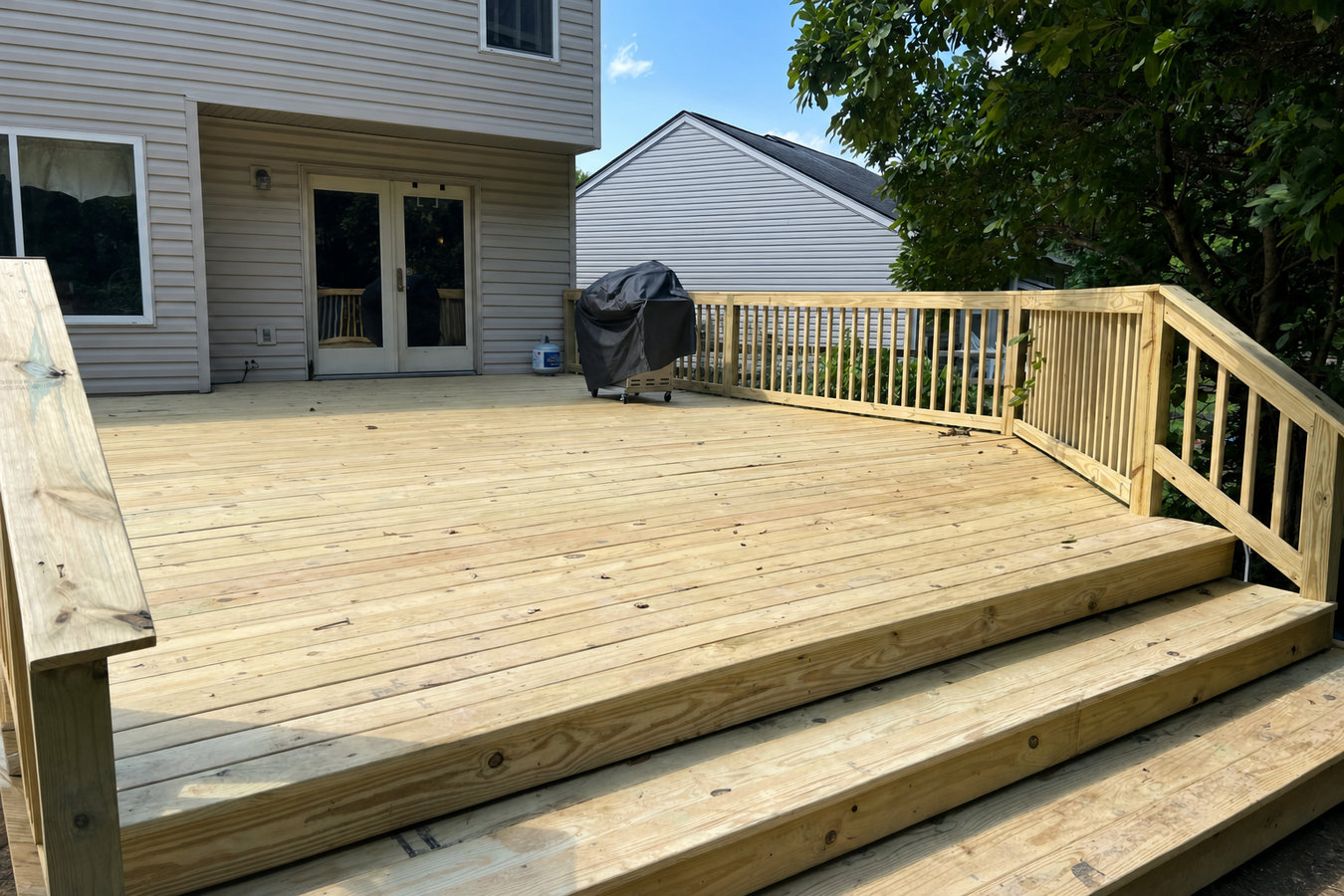
You want a solid outdoor living space without overpaying for materials. We build pressure-treated wood decks in Ormond Beach that are permitted, inspected, and engineered for Florida's coastal soil and climate.
Pressure-treated wood deck construction in Ormond Beach means digging footings into sandy coastal soil, building a permitted structural frame, and laying the decking boards on top - most standard residential projects take three to five days of active work once permits are approved.
Pressure-treated lumber is the most common choice for outdoor decks in Florida because it resists rot, fungal decay, and insect damage. It is the most affordable solid-wood option available. Homeowners who want a real wood deck - with the natural look, the ability to stain it whatever color they choose, and a lower upfront cost - tend to choose it over composite. If you are weighing your options, our cedar wood deck construction page covers the premium wood alternative, and we are happy to walk through the trade-offs with you.
In Ormond Beach, the quality of the footing work matters more than in many other places. The coastal sandy soil here does not grip concrete footings the way denser inland soil does, and a contractor who does not account for that will build you a deck that shifts and settles over time. It is one of the clearest ways to tell who has actually worked in this area before.
If you walk across your deck and certain boards flex more than they should, or feel soft when you press on them, the wood has begun to rot from the inside out. In Ormond Beach's humid coastal climate, this decay can happen faster than homeowners expect - especially on decks low to the ground with limited airflow underneath. A soft board is a safety hazard that can give way without warning.
Ormond Beach homes - particularly those built in the 1980s and 1990s - often have sliding glass doors that open onto a concrete slab or bare ground. If you have been watching neighbors enjoy their decks, a pressure-treated build is one of the most cost-effective ways to add that space. Outdoor living is one of the most consistently requested features among buyers in the Volusia County market.
Black or green discoloration on deck boards is almost always mold or mildew, which thrives in Ormond Beach's warm, wet conditions. Surface mold can sometimes be cleaned off, but if it comes back within a season, the wood has absorbed enough moisture that it is breaking down from within. At that point, cleaning is a temporary fix - replacement is the real answer.
When deck boards curl upward at the edges or develop long cracks running with the grain, the wood has been through too many wet-dry cycles and is no longer reliable. In Ormond Beach, where afternoon thunderstorms are nearly daily in summer, this weathering happens faster than in drier climates. If more than a quarter of your boards show this damage, full replacement is usually more cost-effective than patching.
We handle everything from the first measurement to the final county inspection - design, permitting through the City of Ormond Beach Building Division, footing work, framing, decking boards, railings, and stairs. We use pressure-treated lumber rated for ground contact and coastal exposure conditions, and we specify stainless or hot-dipped galvanized fasteners throughout. If you are also considering deck staining and sealing after the build - and you should wait 60 to 90 days for the new wood to dry before applying a finish - we offer that as a follow-on service.
Every pressure-treated deck we build includes the structural elements that most homeowners never see but always feel: properly sized beams and joists, correctly spaced footings for the deck's span, and board spacing that lets water drain instead of pool. These details determine whether your deck feels solid in five years or starts showing problems after the first wet season.
Full design-to-completion for homeowners adding outdoor living space to a yard that currently has none.
Remove an aging or deteriorated deck entirely and rebuild on a fresh frame with new pressure-treated lumber.
Built-in stairs, seating benches, pergola support posts, or lighting runs incorporated during the build rather than added on later.
If your existing frame is structurally sound, we resurface it with new pressure-treated boards at a lower cost than a full rebuild.
Much of Ormond Beach sits on sandy coastal soil that does not grip concrete footings the same way denser inland soil does. A contractor from outside the area who does not account for this can build you a deck that slowly shifts and settles over time. Experienced builders here know to dig deeper footings or use wider footing bases as a standard practice - not an upgrade. That knowledge matters just as much in Daytona Beach and Port Orange, where soil conditions along the coast are similar.
Florida's building code also requires decks to be engineered for specific wind speeds, and Volusia County's coastal position means those requirements are stricter than in inland parts of the state. This affects how the ledger board is attached to your home, how the posts are anchored, and how deep the footings must go. The result is a structure that is genuinely more robust than one built to minimum standards elsewhere - which matters when hurricane season arrives. The American Wood Protection Association sets the treatment standards for pressure-treated lumber, and specifying the right grade for ground-contact and coastal exposure is something we do as a matter of course.
You reach out and we follow up within one business day. We ask a few basics - deck size, location on your property, HOA status - so the on-site visit is productive. No sales pressure, just a conversation.
We visit your property, assess the ground conditions, measure the space, and walk through what you actually want - size, railing style, stairs. We will also ask about HOA requirements and give you a written itemized quote before we leave.
Once you approve the design and sign a contract, we submit the permit application to the City of Ormond Beach Building Division and handle HOA approval coordination if needed. Permit turnaround typically takes one to three weeks.
The crew digs footings, builds the frame, lays the boards, and installs any railings and stairs. A building inspector visits during framing to check structural work before the boards go down. After final inspection, we clean up and walk you through the finished deck - including when to apply your first sealer.
Written quote, no obligation. We reply within one business day and visit your property at no charge.
(386) 327-0315We have built decks throughout Ormond Beach and Volusia County and we know how coastal sandy soil behaves under load over time. Our footings are designed to stay stable - not just pass inspection on day one.
We pull every permit through the City of Ormond Beach Building Division and schedule inspections as part of the job. A permitted deck protects your investment, satisfies your homeowner's insurance, and transfers cleanly when you sell. We never suggest skipping the permit.
We specify ground-contact-rated pressure-treated lumber and stainless or hot-dipped galvanized hardware on every coastal build. Regular hardware corrodes quickly in Ormond Beach's salt-air environment - these are not extras, they are the baseline for a deck that lasts here.
You receive a written, line-item proposal before any shovels go in the ground. We walk through it with you so every number is clear. The price you approve is the price you pay - no surprises at invoice time. The North American Deck and Railing Association recommends written contracts as a baseline standard, and we follow that on every job.
These details - footing depth, permit compliance, material grade, and price transparency - are what separate a deck that lasts 20 years from one that needs major repairs in five. They are the things worth asking about when you are comparing estimates.
A premium natural wood alternative with a distinctive appearance and natural resistance to decay.
Learn MoreProtect your new pressure-treated deck after the wood has had time to dry - typically 60 to 90 days post-installation.
Learn MoreContractors and permit slots fill up fast in spring - reach out now and lock in your start date before hurricane season makes scheduling harder.